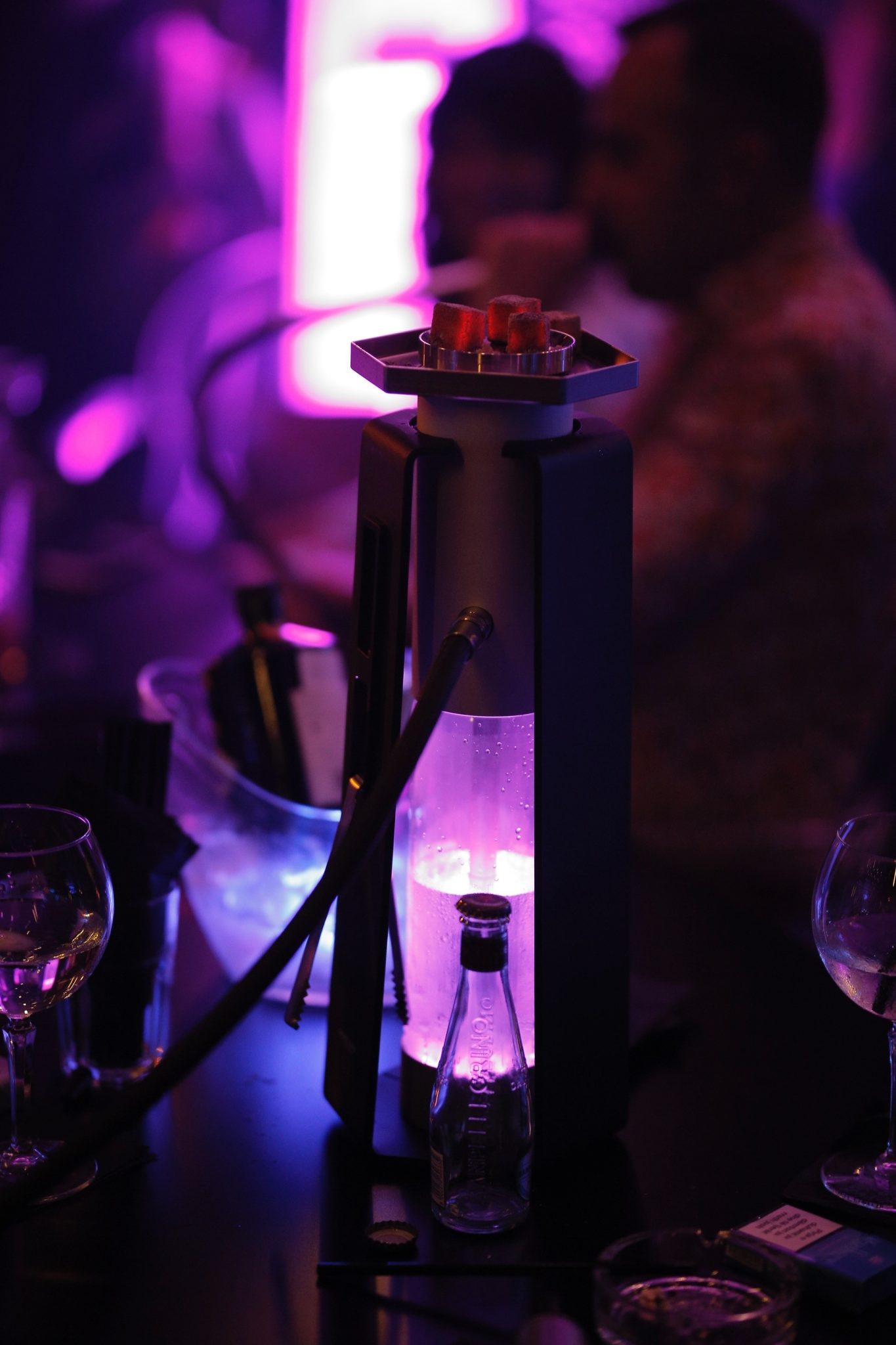
At seven on a Thursday evening on a terrace in Shoreditch, a group of four has finished a second round of old fashioneds. The general manager walks past their table. They wave him over and ask a question that would have felt incongruous five years ago: is there a shisha list?
Rooftop bars in London, Dubai, Monaco and Mykonos are quietly adding shisha to their service menus, and hospitality procurement is catching up. This guide is written for the F&B directors, general managers and independent operators specifying shisha for bars for the first time, and covers what to order, what it costs, how long it takes to arrive, and how to keep it running through a full season.
Why rooftop bars are adding shisha to the drinks menu
In the three years since hybrid service and outdoor-first design reshaped hospitality, shisha has moved from a niche offer in dedicated lounges to a considered component of rooftop bar programmes. The draw is commercial. A well-run shisha service holds a table for 90 to 120 minutes, increases spend per cover by 30 to 50 percent, and gives the venue a signature ritual that guests photograph and share. None of this is new to the F&B director of a Dubai five-star hotel, where shisha has been on the drinks list for three decades. What is new is how quickly the same logic has travelled to London, Monaco and Ibiza.
A Mayfair private member club we work with added terrace shisha in spring 2024 with a 12-piece order for Friday and Saturday service. Within six months the rota had grown to 20 pieces and the club had added a dedicated tobacco sommelier to its bar team. For a closer look at how top-tier venues are integrating the service, our piece on curated shisha service in luxury hotels goes further on the front-of-house side.
The pieces themselves have moved with the category. Contemporary designer hookahs, machined from stainless steel, glass and brass rather than fabricated from turned brass and patterned mosaic, belong visually next to crystal cocktail glassware and brass bar tools. They survive wet-wipe sanitation, fit cleanly on a 70cm bar table, and do not undermine a five-star venue’s aesthetic. For a first-principles view on what good looks like, see our pillar piece on what makes a luxury shisha pipe.
What to specify: the piece, the service kit, and the spares
Most first-time buyers underorder the service kit and overorder the piece. A useful rule: for every hero pipe you buy, budget one complete service kit (bowl, downstem, hose, mouthpiece, charcoal tray, tongs, wind cover) and roughly one-third of a spares set.
Here is the component list we issue to procurement teams:
| Component | Per pipe in service | Spares ratio |
|---|---|---|
| The piece (body and stem) | 1 | 1 spare per 10 |
| Glass bowl | 1 | 25 percent (breakage) |
| Clay head (standard and phunnel) | 2 | 1 full set spare |
| Heat management device | 1 | 20 percent |
| Silicone hose | 1 | 50 percent |
| Mouthpiece (single-use) | Service quantity | N/A |
| Charcoal tongs | 1 per 3 pipes | 20 percent |
| Wind cover | 1 | 10 percent |
| Cleaning brush set | 1 per 5 pipes | 10 percent |
For a rooftop bar planning 20 pieces in service on a peak weekend, that works out to 20 pieces, 20 service kits, and a spares allocation of roughly six hoses, five bowls, and a full set of consumables. It is not the line the supplier wants to lead with, but getting this right at the procurement stage is the difference between a service that runs through a season and one that starts cancelling tables by month three.
MOQ, lead times, and landed cost in 2026
Minimum order quantities for contract-grade luxury shisha in 2026 typically start at 6 pieces for stocked finishes and 12 pieces for customised or co-branded orders. Lead times run 2 to 4 weeks for stocked product shipped ex-warehouse in Germany, 8 to 12 weeks for bespoke finishes, and 10 to 14 weeks for a fully branded house edition. Unit cost for a contract-grade piece sits between £650 and £1,800 depending on finish and edition, with the service kit adding roughly £140 to £220 per pipe. Landed cost to the UK adds 5 to 8 percent for duty and VAT; to the UAE around 5 percent customs plus 5 percent VAT; Monaco falls under French import rules. For budget modelling, venues should allow a capital outlay of £900 to £2,200 per service position fully landed, with an annual replenishment budget of 8 to 12 percent of capex for consumables, bowls, and hoses.
Customisation: finishes, house editions, and branding
Most first orders arrive in the standard stainless-and-glass colourway. The second order almost always adds a custom finish. Popular specifications we have delivered across 2024 and 2025 include brushed brass, matte anthracite, champagne-plated stem with dark walnut inserts, polished black chrome, and the INNOVADE RED anniversary finish in a deep automotive-grade red. Custom engraving of a venue mark or lounge wordmark sits naturally on the stem collar and on the bowl holder ring. A 40-piece order for a Dubai hotel group took their Arabic wordmark laser-etched on both positions and delivered in 12 weeks.
For venues wanting a proper house edition rather than a surface finish, the work starts to look like a small design project: a colour specification sourced from the Pantone or RAL range, an artwork file for the engraving, and a factory sample before the production run. Our recent Monaco commission ran three physical prototypes over four weeks before the factory signed off. Budget four months from initial brief to delivered pieces for anything involving a bespoke colour. If that timeline is tight for an opening date, stocked product in brushed brass or matte anthracite is almost always available in three weeks. Our companion piece on what has changed in modern shisha pipes covers the materials side in more depth.
Service flow, staff training, and safety
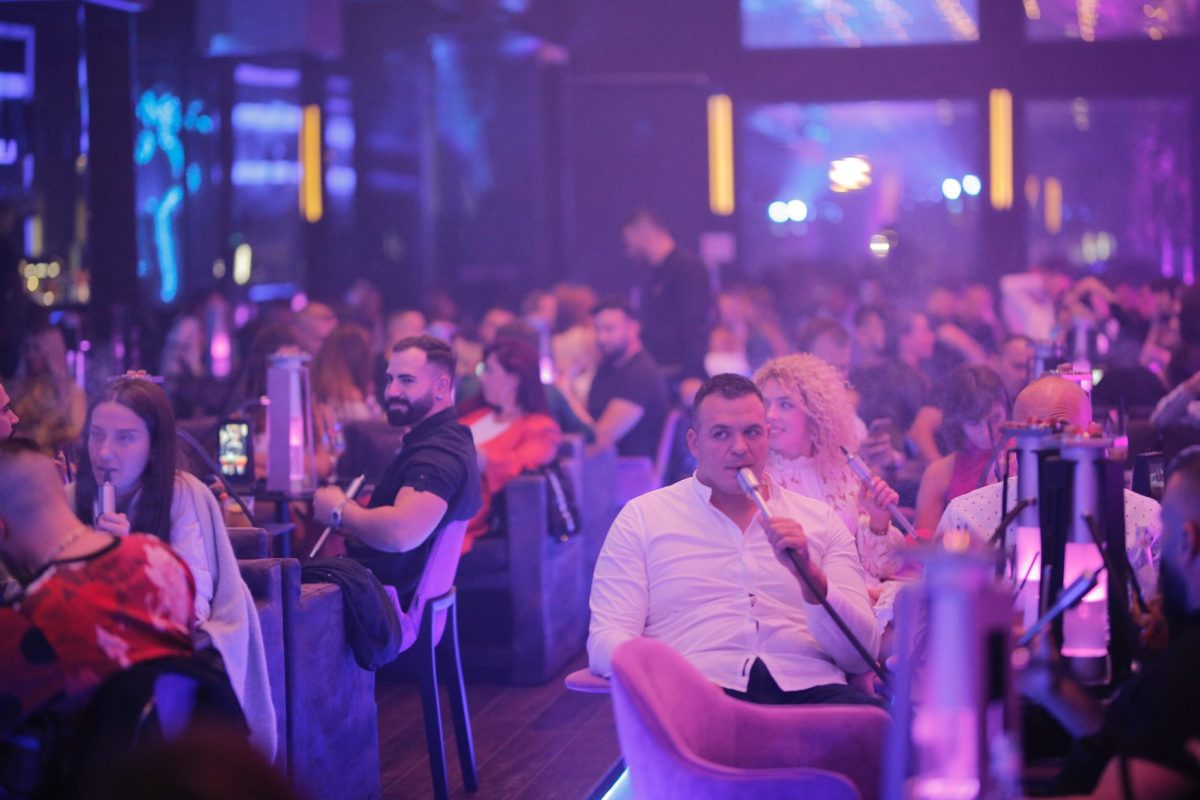
A rooftop shisha service has four operational moments: take the order, prepare the piece, deliver to table with the ritual, and refresh or retire the piece. A trained server will take a table from order to first draw in 6 to 8 minutes. A new server takes 15 to 20. Good venues budget two half-day training sessions for the bar team before go-live, and a refresher every quarter.
Three specifics to get right on day one:
Heat management. A heat management device (HMD) replaces loose charcoal on top of foil, reduces ash transfer to the table, and makes a server’s refresh job one action instead of three. For outdoor service on windy rooftops, HMDs are essential rather than optional.
Ventilation and licensing. Rooftops solve the ventilation question naturally but still benefit from a wind cover on each piece, both to stabilise the coal and to keep ash off the guest. For covered terraces, check the venue’s smoking regulation classification: shisha tobacco falls under the UK smoke-free regulations, which means any covered area needs to qualify as outdoor.
Single-use mouthpieces. Provide a sealed single-use mouthpiece per guest. This is non-negotiable for premium venues and costs pence per guest. The hose tip is the guest-facing consumable and a single-use tip is the baseline hygiene standard.
Care and maintenance in service
Contract-grade product is expected to survive a wet wipedown between guests and a full strip, wash and polish at end of service. Material selection drives the care regime. Stainless steel and glass tolerate hot soapy water and a soft microfibre cloth. Brushed brass benefits from a dedicated brass polish once a week. Anodised finishes should never see abrasive pads. We write these rules into the care card shipped with every order.
Hoses and bowls are the real consumables. A silicone hose should be retired at about 30 days of heavy use. A glass bowl is retired the moment it chips. Budget replacement accordingly. A Mykonos beach club running 15 pieces through July and August replaced two full hose sets across the two months, one bowl per week, and no structural parts. That is a reasonable shape for a 60-day peak season.
Delivery and compliance across the UK, EU, and the Gulf
Contract shipping is a boring but important line on the specification. Stocked pieces ship DAP (delivered at place) from our Hamburg warehouse to London, Paris, Monaco, Milan, Rome, Madrid or Athens on a 3 to 5 working day pallet or parcel service. To the GCC (Dubai, Abu Dhabi, Riyadh, Jeddah, Doha, Kuwait City, Manama) we use a consolidated air freight partner with a 6 to 9 working day transit. For shipments over 50 pieces, sea freight to the Gulf is cheaper but adds 4 to 6 weeks. Most hotel orders we see still prefer air.
Customs paperwork travels with the shipment. We issue the appropriate HS code (7323 or 7324 depending on composition) with a commercial invoice; duty and VAT remain the importer’s responsibility. For hospitality buyers in the UAE, we can route through a local freight agent if the hotel’s procurement department prefers. UK-based venues should check the local licensing position: most London boroughs treat shisha service as covered by the existing on-trade premises licence, with no additional permit required if the venue is already licensed for alcohol service. A small number of boroughs ask for a separate notification.
A specifier’s quick checklist
When signing off the purchase order, work through this list:
- Confirmed quantity of pieces, matched one-to-one with complete service kits
- Spares allocation: 25 percent bowls, 50 percent hoses, 10 percent structural parts
- Finish confirmed against a physical sample, signed off by the design lead
- Single-use mouthpiece supply contracted through the opening quarter
- Heat management devices included as standard in the kit
- Care cards, printed in the venue’s house language, included with the shipment
- Two training sessions booked for the bar team two weeks before opening
- First replenishment order scheduled for month 3 based on usage data
- Landed cost modelled per service position, not per piece
- Customs paper trail held by the finance team for audit
Available from Innovade. Innovade designs and manufactures contract-grade luxury shisha pipes in Germany for the hotel and bar trade, with stocked product available from three weeks and custom finishes from twelve. To open a specification conversation, send us an enquiry with your venue, piece quantity, and opening date.
Frequently Asked Questions
What is the minimum order quantity for shisha for bars?
Most luxury manufacturers hold an MOQ of 6 to 12 pieces for stocked finishes and 12 to 24 for customised orders. At Innovade the MOQ is 6 pieces for stocked finishes and 12 for custom.
How much does shisha for bars cost per unit, landed in the UK?
A contract-grade piece lands in the UK at approximately £900 to £2,200 per service position, including the piece, the complete service kit, duty and VAT. Custom editions and premium finishes sit at the higher end; stocked product in standard finishes sits at the lower end.
Can we brand shisha pipes with our venue mark?
Yes. Laser engraving on the stem collar and bowl holder ring takes 6 to 8 weeks from artwork approval. A dedicated colour edition takes 12 to 16 weeks including sample sign-off.
Is shisha service allowed on a UK rooftop bar?
Shisha tobacco falls under UK smoke-free regulations, which restrict smoking under any substantially covered area. Open rooftops and uncovered terraces qualify as outdoor space. Most London boroughs do not require a separate licence beyond the existing on-trade premises licence, but local rules vary and should be checked with the borough licensing team.
How long does a shisha pipe last in commercial service?
Structural parts, the body and stem, should last the life of the bar with proper care. Glass bowls, silicone hoses, and mouthpieces are consumables. Plan for bowl and hose replacement every 30 to 60 days of active use.
What is the difference between shisha for bars and shisha for home use?
Contract-grade shisha is built to tolerate high-cycle service, wet sanitation, and mixed-skill operators. Home-market product is lighter, often uses softer metals or composite stems, and is not warranted for commercial use. Specifying a home piece for a bar service is a false economy that shows up by month two.
Do you ship to Dubai, Riyadh and Doha?
Yes. Consolidated air freight on 6 to 9 working days to the GCC, with customs paperwork held by the shipment. For orders over 50 pieces, sea freight is an option at 4 to 6 weeks transit at lower unit shipping cost.
Good procurement is undramatic: the pieces arrive on time, the spares are in the cellar, the bar team knows the ritual, and the first Friday runs without incident. For a closer look at how a luxury hotel presents shisha to its guests and why the commercial case keeps getting stronger, our piece on curated shisha service in luxury hotels is the natural next read.
