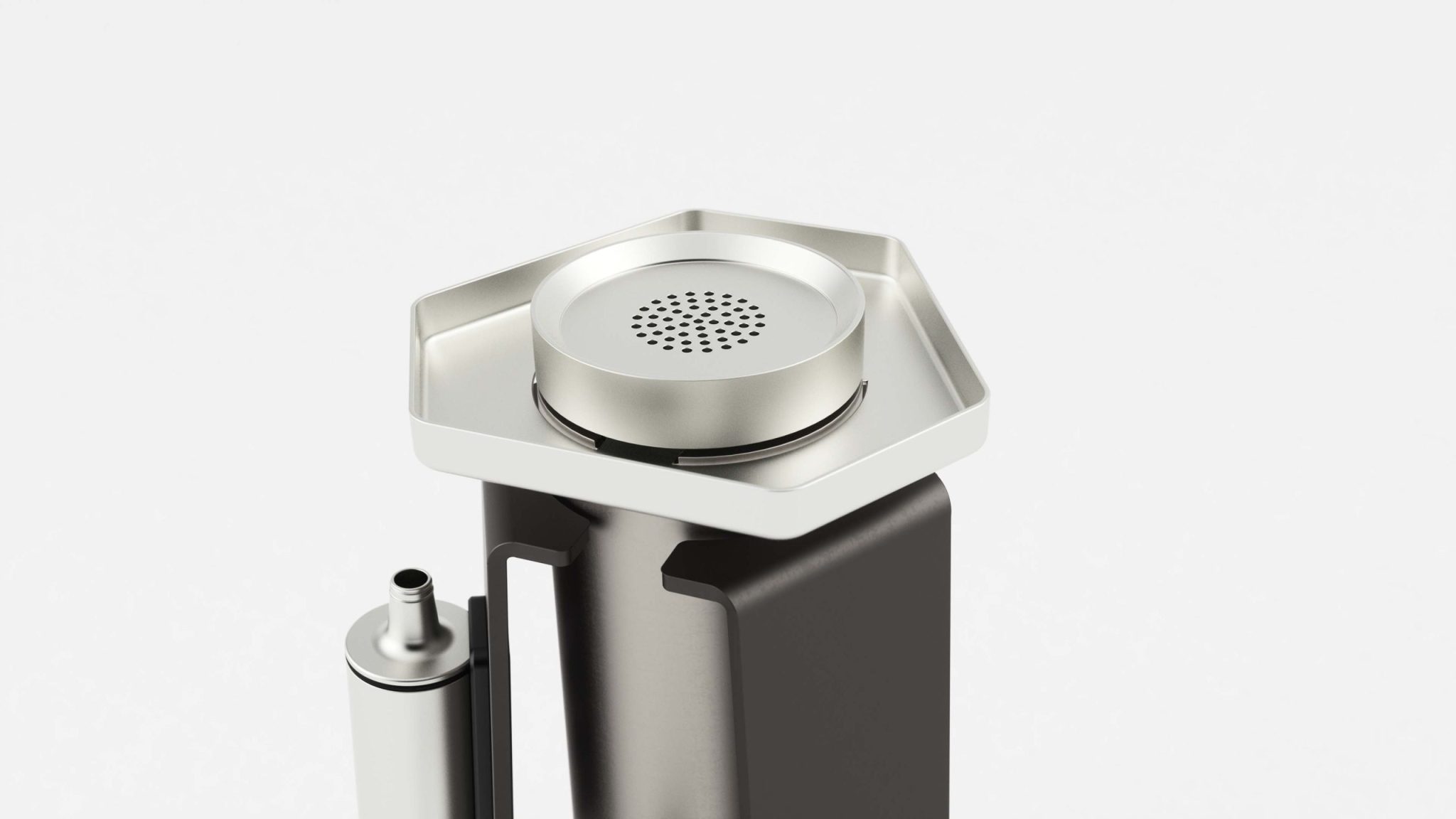
At a private suite in a Riyadh palace hotel, the after-dinner service includes a curated tobacco menu, a small ice bucket, and a single shisha pipe finished in anodised black. The pipe is brought in on a wheeled trolley, set up by a trained attendant, and removed forty minutes later. Across the GCC this scene now repeats nightly. Luxury shisha service in 2026 looks closer to bottle service than to the casual smoke of fifteen years ago.
For F&B directors at five-star properties in Dubai, Riyadh, Abu Dhabi, Doha, Manama, Kuwait City, and Jeddah, the question this year is no longer whether to offer luxury shisha, but how to differentiate. The category has matured. Pieces are sourced from a smaller set of contract-grade designer brands; service is treated as a ritual; the room itself is increasingly built around the offer rather than retrofitted to it. This is a working view of where the GCC luxury shisha market sits in 2026, what is driving demand, and what procurement teams are asking for.
The state of the GCC luxury shisha market in 2026
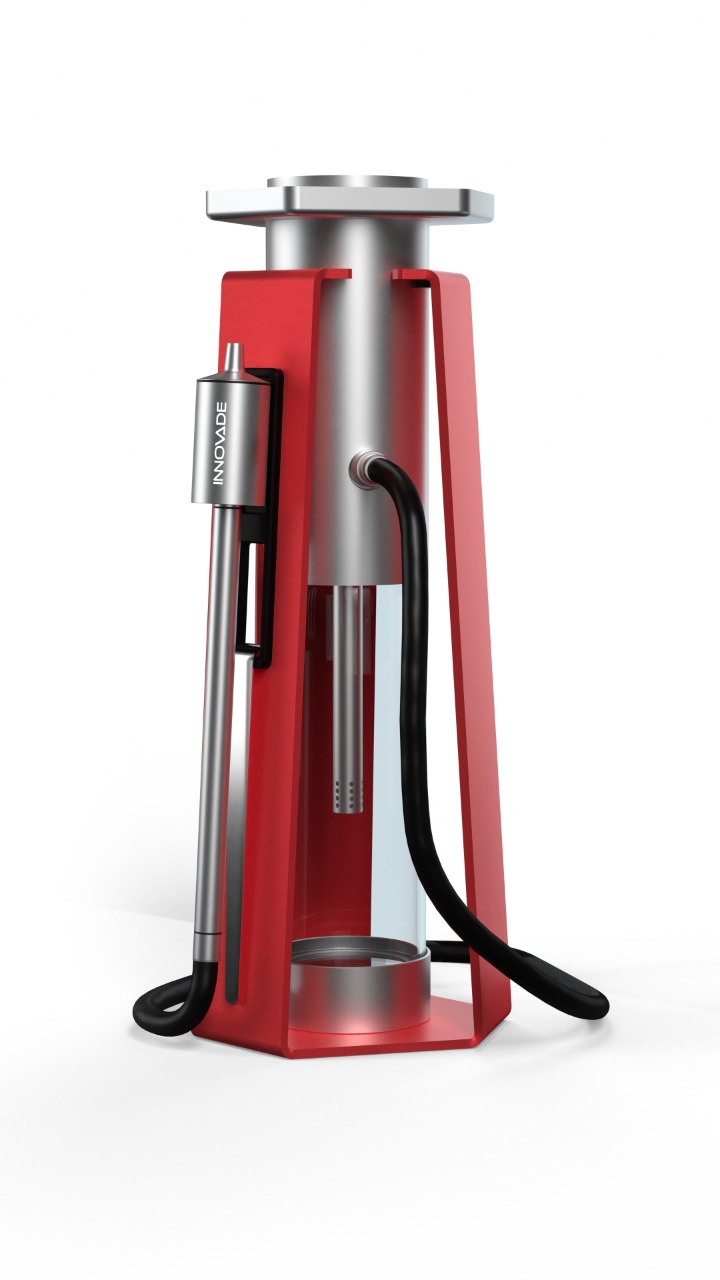
The Middle East luxury shisha market has consolidated around design-led procurement. Where five years ago a five-star property in Dubai or Doha might have stocked a mixed inventory of mid-market hookahs alongside a handful of premium pieces for VIP suites, in 2026 the upper tier of the GCC hospitality market is buying brand-by-brief: a small set of contract-grade German-designed brands (Innovade, Steamulation, El-Badia, Porsche Design) sit alongside the Egyptian heritage option (Khalil Mamoon) for properties wanting a deliberately traditional character.
The numbers tell the story. A typical 5-star property in Dubai or Riyadh now commits to between thirty and one hundred luxury shisha pieces across the suite, terrace, lounge, and rooftop service points, up from ten to thirty five years ago. Saudi Arabia is the largest single growth market, with Vision 2030 hotel openings (NEOM, Diriyah, Red Sea, AlUla) driving fresh procurement at scale. The UAE remains the most mature market by per-property spend; Qatar has consolidated its post-World Cup hospitality stock and is now in a refurbishment cycle.
Refresh cycles have tightened. Glass bases and hoses, the consumable parts of any shisha pipe, are now typically replaced every twelve to eighteen months in heavy hospitality service, against twenty-four to thirty-six months previously. Properties that used to absorb hose wear have begun specifying replacement scheduling as part of the original contract, and brands have responded with subscription-style replenishment.
What is driving demand
Three forces are shaping the 2026 luxury shisha market in the Middle East.
The Saudi Vision 2030 hotel pipeline. Saudi Arabia’s tourism strategy is the largest single demand driver in the region. Multi-billion riyal hospitality projects in NEOM, Diriyah Gate, the Red Sea Project, AlUla, and Riyadh’s central business district are commissioning shisha specifications years before doors open. Operators awarded these projects have a clear preference for contract-grade design-led brands, partly because the brief is for hotels that read internationally and partly because Vision 2030 is positioning the kingdom as a luxury destination.
The tourism boom across the GCC. The UAE Tourism Strategy 2031, Qatar’s post-World Cup positioning, Bahrain’s regional medical-tourism push, and Oman’s slow-luxury repositioning have all increased the number of five-star room nights served annually. F&B revenue per available room is increasingly being benchmarked across the region, and a curated luxury shisha programme is now considered table stakes for a five-star property aiming at the regional traveller.
A cultural shift in how shisha is positioned. Across the GCC luxury market, shisha has been repositioned from a student-coffee-house product to an adult, considered ritual, closer in register to a fine cigar service or a single-malt presentation. The hospitality directors leading this shift are now design-literate, brand-aware, and willing to commission bespoke pieces. The result is a market that buys on aesthetic and engineering, not on price.
Where the spend is concentrated
Spend across the GCC luxury shisha market is uneven. Six cities account for the majority of upper-tier procurement.
Dubai. Palm Jumeirah, Bluewaters, DIFC, Downtown, and the Marina form the core of the world’s most concentrated five-star hotel district. High turnover, high refresh rate, brand-conscious procurement. Bespoke finishes are standard practice; many properties commission an Innovade or Steamulation finish matched to the suite palette.
Riyadh. The fastest-growing GCC market in 2026, driven by Vision 2030 hotel pipeline. Palace-style properties commission at scale; pre-IPO corporate hospitality (executive lounges, private dining clubs) is a quieter but significant secondary segment. Procurement is centralised through hotel operating groups and increasingly through dedicated luxury procurement consultants.
Abu Dhabi. Saadiyat, Yas Island, the Corniche. Long-stay luxury, conservative procurement, slower decision cycles than Dubai but larger contracts when committed. The Saadiyat cultural cluster has driven demand for design-credible pieces matched to architecture.
Doha. Post-World Cup hospitality consolidation. Fewer new builds in 2026, but deeper refurbishment spending across The Pearl, West Bay, and Lusail. Properties are upgrading from mid-market hookah inventory to contract-grade design brands as part of broader F&B repositioning.
Manama. Smaller market by volume but high per-property spend. Bahrain’s role as a regional headquarters market means corporate hospitality (executive suites, club lounges, private dining) drives a meaningful share of procurement.
Kuwait City. Family-led hospitality groups, longer procurement cycles, larger per-piece spend. Bespoke finishes are common; turnover is slow but quality bar is high.
Jeddah. Red Sea Project openings are driving fresh demand. Historically a quieter market than Riyadh, Jeddah is now in a refurbishment and new-build cycle that is putting it on the procurement map for design-led brands.
How procurement teams are specifying
The brief from a five-star hotel procurement office in 2026 reads differently from five years ago.
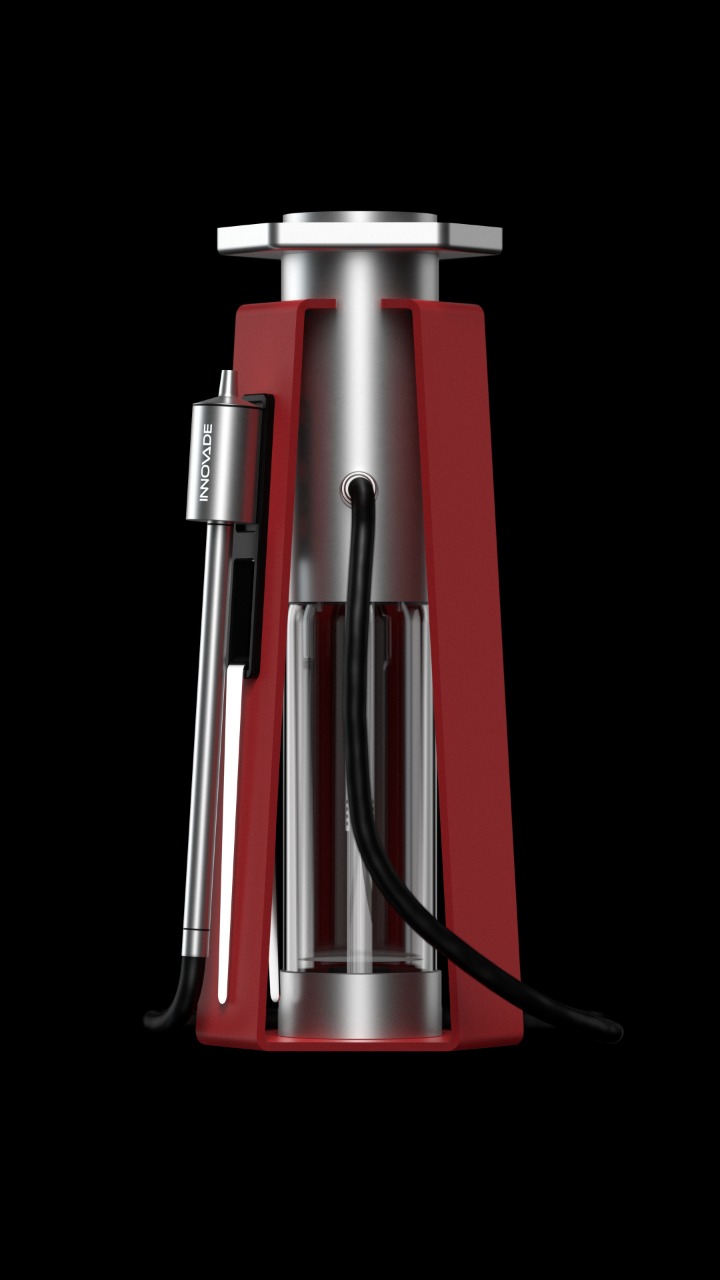
Brand-by-brief. Hotel procurement now specifies brands by design language: Innovade for contemporary German architectural minimal; Steamulation for modular performance; El-Badia for heritage German; Porsche Design for industrial luxury; Khalil Mamoon when the brief calls for traditional Egyptian. Mixed inventories are common; properties want different pieces for different rooms.
Serviceability is now a primary spec. Procurement teams ask explicitly about replacement-part availability, factory-direct hose and glass replenishment terms, warranty length, and bowl replacement protocols. A piece that cannot be serviced is no longer competitive at the upper tier.
Bespoke finishes. More properties are commissioning one-off finishes matched to the suite, terrace, or room palette. Anodised colours, lacquer matches, and laser-etched property marks are standard custom work. Lead times for bespoke finishes typically add two to three weeks beyond the standard production cycle, and procurement teams build this into the hotel opening schedule.
Volume tiers. Contract pricing at five, twenty, and fifty piece thresholds is now the norm across luxury brands. Properties commissioning at the higher tiers receive progressive discounts and, increasingly, included staff training as part of the contract.
Lead times. Procurement is contracted weeks ahead of a season opening, with longer cycles for bespoke finishes. The era of last-minute hookah ordering for a property opening is over at the upper tier.
Trends to watch in 2026
Five trends are shaping the GCC luxury shisha market this year.
Outdoor and rooftop service is the centre of gravity. Cooler shoulder seasons across the GCC have made terraces, rooftops, and outdoor lounges the prime shisha service environments. Properties are designing outdoor furniture, lighting, and air management around shisha service rather than treating it as an afterthought.
Single-pipe service as the new luxury default. The shared, communal hookah of mass-market cafes has been quietly designed out of five-star service. Luxury properties now serve one pipe per guest or per pair, with rapid rotation through a dedicated service trolley so each session feels personal rather than communal. Procurement volumes have risen accordingly.
Charcoal alternatives. Induction-heated coal trays are appearing in five-star properties looking to reduce smoke management, simplify staff training, and align with quieter indoor service. They have not displaced traditional charcoal at the high end, but they have become a procurement option.
Heat management is now a procurement filter. Engineering claims that used to be brand marketing are now technical requirements in F&B briefs. Hot-running pieces that produce harsh smoke are being rejected at the procurement stage.
Staff training as a contract line. The most demanding properties now expect brands to deliver on-site staff training as part of the contract: how to prepare a session, how to serve, how to clean and store, how to recognise wear. The brands that offer this win the larger contracts.
What hospitality leadership is asking us
How many pieces should a five-star hotel commit to?
Across the GCC luxury market, properties typically commission between thirty and one hundred pieces depending on size, room count, terrace footprint, and rooftop service intensity. A 200-key property with a single rooftop bar might start at thirty; a 400-key property with multiple terraces, suites with private balconies, and an executive lounge programme will sit between sixty and a hundred.
What is the refresh cycle for hose and glass consumables?
In heavy hospitality service, expect hoses and glass bases to be replaced every twelve to eighteen months. Bowls and seals are replaced more frequently. Most luxury brands offer scheduled replenishment as part of the original contract.
Can finishes be matched to the property’s design language?
Yes. Anodised colour matches, lacquer pulls, and laser-etched property marks are standard custom work for the design-led brands. Lead times for bespoke finishes typically add two to three weeks. The investment is rarely material at the upper tier.
What is the lead time for a hotel opening?
Procurement timing is confirmed at enquiry and adjusted to the property’s opening schedule. For multi-property groups specifying across a portfolio, the planning horizon is longer.
Is staff training included?
At the higher contract tiers, yes. Staff training is increasingly a contract line and is provided either by the brand directly or by a regional partner. Properties commissioning at fifty pieces or above should expect to negotiate training as part of the contract.
How does pricing scale at higher volumes?
Most luxury brands operate progressive contract discounts at five, twenty, and fifty piece thresholds, with bespoke finish premiums layered on top. Pricing is confirmed at enquiry rather than published, and procurement teams negotiate currency, freight, and customs terms separately from per-piece pricing.
The view from Innovade
This is our editorial view of the market we serve. Innovade has been in service across the GCC since 2019 and ships direct from our Hamburg workshop to properties in Dubai, Riyadh, Abu Dhabi, Doha, Manama, Kuwait City, and Jeddah, as well as to private buyers across the region. Our reading of 2026 is that the GCC luxury hospitality market will continue to consolidate around a small set of design-led brands, that bespoke and contract-grade work will outpace stock-piece sales, and that staff training and serviceability will become procurement filters as much as design and material are today.
For a wider survey of the luxury shisha brand market, see our 2026 brands buyer’s guide. For the engineering story behind Innovade specifically, read the story of a German-designed luxury shisha pipe. Trade procurement enquiries can be addressed via the luxury shisha pipes buyer’s guide or the studio direct.
