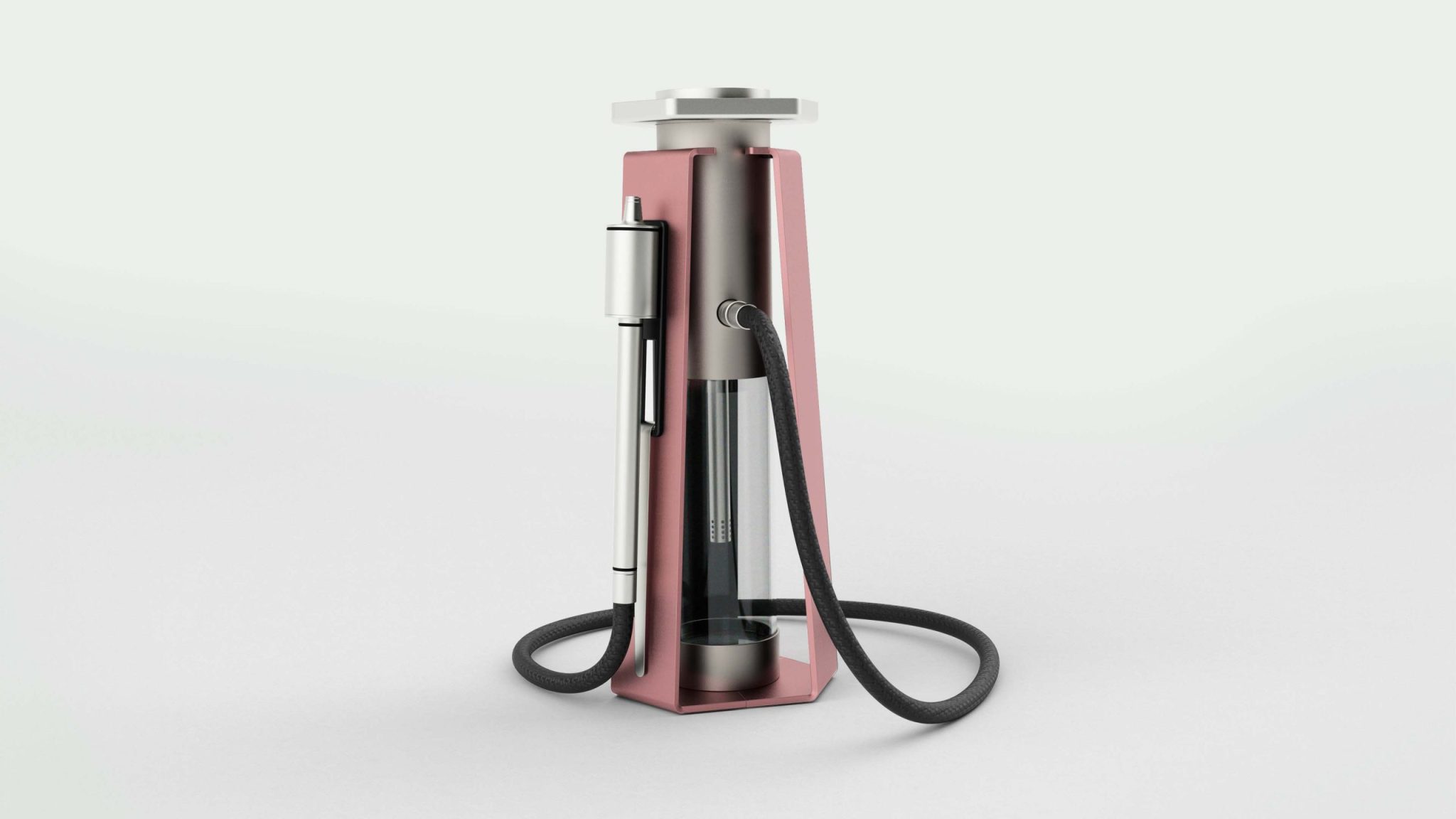
The F&B director of a five-star hotel in Knightsbridge spent forty-five minutes last spring arguing with a brand consultant about a single line on a draft menu. The line read “Shisha service from 7pm”. The consultant wanted “Hookah service”. The director refused. The consultant insisted. They settled it by ringing the GM, who chose “Shisha”.
The argument is not unusual, and the answer matters more than people think. Hookah and shisha are often used interchangeably in English, but they refer to different things. Hookah is the pipe – the physical object with a base, stem, head, and hose. Shisha is the flavoured tobacco that goes inside the head, and by extension the whole experience of smoking that tobacco through a hookah. The reason the menu wording matters is that the audience is not the same: “shisha” reads to most UK and European hospitality customers as the experience and the social ritual; “hookah” reads as the equipment, often with American or trade overtones. For a luxury venue, the choice signals which tradition the service is rooted in.
The short answer in one paragraph
The hookah is the pipe. The shisha is the tobacco that the pipe smokes, and the social ritual of smoking it. In the UK, EU, and most of the Middle East, “shisha” is the word a hospitality customer uses for the whole thing – “we’ll have shisha after dinner” – while “hookah” is more often used in trade, in product specifications, and in American hospitality contexts. The two words are not synonyms in any precise sense, but they do overlap in common use, and the right word for a luxury venue depends on geography and audience rather than on a technical rule.
Where each word actually comes from
The two terms have separate roots, and the etymology explains the present-day split.
“Hookah” comes from the Hindi-Urdu word huqqa, itself from the Arabic huqqa, meaning a small box or jar. The word entered English through colonial-era India, where Mughal courts had been using a water-pipe form of tobacco smoking since at least the late sixteenth century. The British civil service and military picked up the word, the practice, and the object together; “hookah” thus arrived in English as the name of the apparatus, with the social experience secondary.
“Shisha” comes from the Persian shishe, meaning glass, by way of Arabic. In Egyptian and Levantine usage from the nineteenth century onwards, “shisha” referred specifically to the flavoured tobacco product (also called muassel, “honeyed”) that began to displace the older plain-tobacco tombak. By the late twentieth century, “shisha” had broadened in everyday Egyptian, Lebanese, and Gulf Arabic to mean the whole experience: the tobacco, the pipe, and the act of smoking. When the word arrived in the UK with the spread of Egyptian and Levantine cafe culture in the 2000s, it brought the broader meaning with it.
The result is two English words that started in different places, attached to different parts of the same object, and ended up partly overlapping. Hookah names the pipe and increasingly the experience in American English. Shisha names the experience and increasingly the pipe in British and European English. Neither is wrong; they are speaking from different traditions.
How the terms are used by region
For a hospitality buyer specifying menu language, signage, or marketing copy, the regional usage matters more than the technical etymology.
- United Kingdom and Ireland: “shisha” is the dominant word in hospitality and in the press. “Hookah” appears in product names and trade publications but rarely on a customer-facing menu.
- European Union: “shisha” is dominant in France, Germany, the Netherlands, and Iberia. Italy uses both, with “narghile” appearing in older menus. Eastern Europe uses “kalyan” or transliterated equivalents.
- Middle East and North Africa: “shisha” in Egypt and the Levant; “narghile” or “argileh” in Syria and Lebanon and Jordan; “hubbly bubbly” colloquially in some Gulf English; “muassel” specifically for the tobacco itself; “qalyan” or “ghalyoon” in Iran.
- Gulf Cooperation Council: “shisha” is the common English-language word in hospitality menus in Dubai, Abu Dhabi, Riyadh, Doha, and Manama. “Hookah” appears in trade and tourism marketing aimed at American audiences but is less common on local menus.
- India and Pakistan: “hookah” is the historical term and remains in use, although “shisha” has become widespread in lounge and cafe contexts since the 2000s.
- Turkey: “nargile” is the dominant local word. “Shisha” appears mainly in tourist-facing venues.
- United States and Canada: “hookah” is the dominant word in both hospitality and trade. “Shisha” is recognised but more often refers specifically to the tobacco.
For a UK luxury hotel writing a menu, “shisha” is almost always the right word. For a Dubai resort writing English-language signage for a mixed European and American clientele, the same applies. For an American hotel chain extending shisha service into a UK property, internal documentation may say “hookah” but customer-facing copy should switch.
The pipe and the tobacco – a clearer split
If a buyer or specifier needs precision, the cleanest split is between the apparatus and the consumable.
- The pipe: the physical object. Has a base (often glass), a stem (typically metal), a head or bowl (clay, ceramic, or metal) where the tobacco is loaded, a charcoal tray, and one or more hoses. This is the hookah. In luxury contexts it is also called a shisha pipe, a designer hookah, or simply “the pipe”.
- The tobacco: the flavoured tobacco loaded into the head. Most modern luxury and mass-market shisha tobacco is muassel, a mixture of tobacco leaf, molasses or honey, glycerine, and flavouring. This is the shisha, in the most original Egyptian sense of the word. Brands include Al Fakher (Jordan), Adalya (Turkey), Starbuzz (US), Tangiers (US), and craft labels like Trifecta and Fumari.
- The charcoal: a separate consumable. Natural coconut-shell charcoal is the standard for luxury venues; quick-light tablet coals are common at the mass-market end and are not specified into luxury hospitality.
- The experience: the social ritual of preparing, smoking, and sharing the pipe. This is what most UK and European customers mean when they say “shisha”.
A luxury venue specifying for service usually buys the pipe, the tobacco, and the charcoal as three separate procurement lines, often from three different suppliers. The pipe is the long-term capital purchase; the tobacco and charcoal are recurring consumables.
Why luxury hospitality cares about the word choice
The terminology is a positioning decision, and luxury venues that get it wrong telegraph that they have not thought about it.
“Shisha service” on a five-star hotel menu reads as part of an Eastern Mediterranean and Levantine tradition – the language of Cairo cafes, Beirut rooftops, and Mayfair private member clubs. It signals a venue that takes the social ritual seriously. “Hookah service” on the same menu reads slightly more clinically, as if the venue is highlighting the equipment rather than the experience. Both readings can be valid – some venues do want the equipment to be the visible part of the offer – but most luxury operators are selling the ritual, and “shisha” is the right word for it.
The exception is American luxury hospitality crossing into UK and Middle East markets, where in-house terminology often defaults to “hookah” because the parent brand’s documentation does. The right move there is to localise: keep “hookah” for trade and engineering documentation, switch to “shisha” for menus, signage, in-room collateral, and concierge scripts.
How the luxury pipe market labels itself
The brands themselves use both terms, often at the same time. The current market convention runs roughly:
- Egyptian and traditional brands (Khalil Mamoon, the older Beirut workshops) tend to call the object a shisha or a narghile, in line with regional usage.
- German engineering brands (Aladin, Steamulation) and design-led brands (Innovade, Shika) typically use “shisha pipe” in English-language collateral and “hookah” in technical specifications and parts catalogues.
- American and crossover brands (Starbuzz pipes, MOB, Mya) lean toward “hookah” in branding.
- Luxury fashion crossovers (Porsche Design 2.1) use “shisha” as the brand object name, even though the product registers internally as a hookah.
For a procurement team reading a brand’s catalogue, the term used in product names is mostly a marketing choice and rarely encodes a technical distinction. The pipe is the same object whether the manufacturer calls it a hookah or a shisha.
The trade procurement view
For UK hospitality buyers placing trade orders, the word choice has practical implications in three places.
First, search and specification. A venue’s interior designer searching for “luxury shisha pipe London” will surface a different set of suppliers than a search for “luxury hookah London”. The shisha-led searches lean toward European-distributed brands and craft heritage workshops; the hookah-led searches lean toward US distributors and trade-side suppliers. Both can be legitimate, but the shortlist will be different.
Second, customs and shipping documentation. International freight forwarders sometimes classify the object differently depending on the descriptor on the commercial invoice. “Hookah” tends to be coded as a tobacco-paraphernalia item; “shisha pipe” as a glassware-and-metalwork item. The end duty treatment is broadly similar in the UK, but the inspection profile can differ. Brand-side trade teams handle this for direct orders; for indirect ones, ask the forwarder to confirm.
Third, staff training and customer-facing scripts. A venue that uses “shisha” on the menu needs the floor team to use “shisha” on the floor. Mismatched terminology – menu says one thing, server says another – is a small but visible signal of an underbaked offer. For a venue investing five-figure sums in shisha pipes for service, the few minutes of script alignment is the cheapest way to protect the spend.
Frequently asked questions
Is hookah the same as shisha?
Not technically, but they overlap in everyday English. Hookah is the pipe; shisha is the tobacco the pipe smokes, and by extension the social experience. In UK and EU hospitality, “shisha” is the broader and more common word; in US hospitality, “hookah” is. Both are correct in context.
What word do most luxury hotels use on their menus?
“Shisha” is the dominant menu word in UK, EU, and Gulf luxury hospitality. “Hookah” appears more often in American luxury hospitality and in trade-side documentation. For UK-facing menus and signage, “shisha” is almost always the right call.
What is the tobacco in a shisha called?
Muassel, also called shisha tobacco. It is a mixture of tobacco leaf, molasses or honey, glycerine, and flavouring agents. Major brands include Al Fakher, Adalya, Starbuzz, Tangiers, Trifecta, and Fumari. Luxury venues typically pair the pipe with two or three muassel brands and a small in-house flavour selection.
Is hookah more dangerous than shisha?
The question is malformed. Both words refer to the same act of smoking flavoured tobacco through a water pipe. Health implications are identical regardless of which word is used. Public Health England guidance, NHS guidance, and equivalent EU bodies treat shisha and hookah as the same product for harm purposes.
What is the difference between hookah and a vape?
A hookah is a water pipe that burns charcoal to heat flavoured tobacco; the smoke is drawn through water before reaching the smoker. A vape is an electronic device that vaporises a liquid, often nicotine-containing, without combustion. They are entirely different categories, although some marketing collateral has muddied the line. UK licensing and regulation treat them differently.
Do luxury shisha pipes come with their own tobacco?
Generally no. The pipe and the tobacco are bought and stocked separately. A luxury pipe is a long-term capital object; the tobacco is a regular consumable purchased from specialist suppliers. Some brands ship a starter selection of muassel with a new pipe, but it is intended for first use rather than long-term supply.
Should a UK private member club call its offering shisha or hookah?
Almost always shisha. The audience is UK-and-EU-orientated; the staff scripts work better with the social-experience framing; the press coverage uses the word; and the wider hospitality market expects it. American or crossover venues with a different parent brand identity may have a reason to differ, but the default for UK private clubs is shisha.
What about narghile, hubbly bubbly, hubble bubble, kalyan?
All names for the same object or experience, used regionally. Narghile is Lebanese, Syrian, Jordanian, and Turkish. Hubbly bubbly and hubble bubble are colloquial English-language carryovers from colonial India and South Africa. Kalyan is Russian and Eastern European. None of these are wrong; they are simply less likely to appear on a UK or EU luxury hospitality menu.
Available from Innovade
Innovade designs contemporary luxury shisha pipes – or hookahs, if the trade catalogue prefers – in Germany. The current line is sold in three editions: BLACK, RED, and PINK. Hospitality buyers can request trade pricing, lead times, and customisation through the contact form on innovade.uk. The three editions are also available for private purchase via the Innovade store.
For more on what separates a luxury shisha pipe from a mass-market hookah, see our pillar piece on what makes a luxury shisha pipe. For the wider brand landscape, see the 2026 UK buyer’s guide to luxury shisha brands. For the hospitality procurement angle specifically, see the rooftop bar procurement guide.
