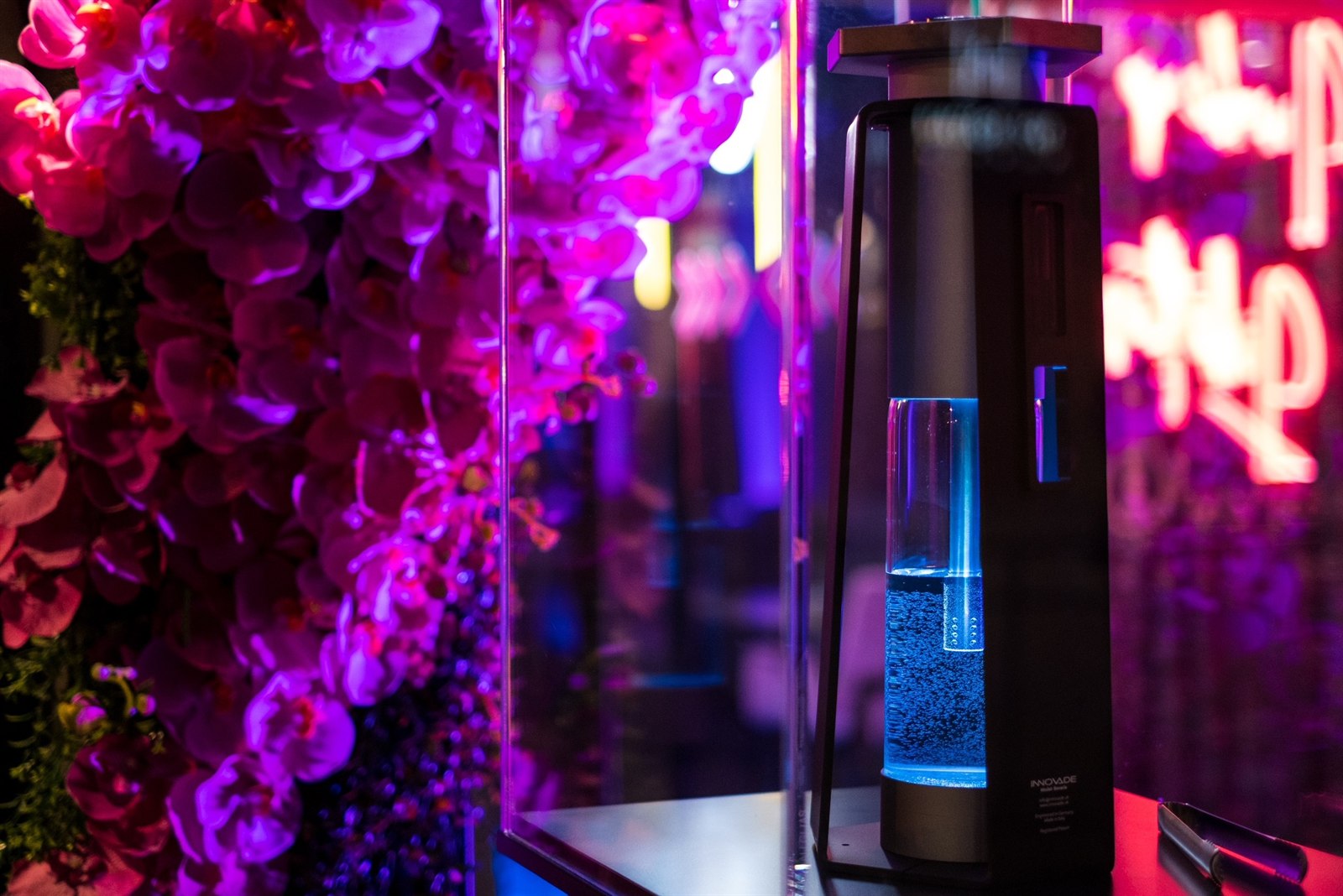
The evening settles over the marina. The lunchtime crowd has gone, the water has flattened to glass, and a small group has drifted to the aft deck with coffee and something to talk about. In the low light, the object on the table earns a second look before anyone reaches for it.
That moment, unhurried, private, and a little theatrical, is what has made shisha for yachts and private residences a quiet fixture of high-end entertaining, from the Cote d'Azur to Dubai Marina. It is less about the smoke than about the pause it creates: a reason to stay at the table, slow the conversation, and let the evening run long. This piece looks at how that ritual actually works on board and at home, what it asks of the host, and why the object itself matters as much as the setting.
An object that belongs at sea and at home
A high-end shisha is a strange thing to specify well. It sits somewhere between glassware, lighting, and sculpture, and it has to survive being handled by people who have had a drink. On a yacht or in a residence it is on show whether or not anyone is using it, so it is judged first as an object and only later as equipment. That is the standard Innovade designs to, and it is the same thinking that separates a serious piece from a novelty, a distinction covered in more depth in what makes a luxury shisha pipe.
The honest version of this subject is more useful than the brochure version, so the sections below are direct about what charcoal shisha can and cannot do on the water. Get that right and the rest, the materials, the heat, the service, falls into place.
Why charcoal shisha is a deck ritual, not a salon one
Innovade is a charcoal pipe. That single fact decides most of what follows. Lit charcoal means glowing embers and a slow release of carbon monoxide, and neither belongs in a closed interior at sea. Yacht fire-detection systems are deliberately sensitive, smoke sets them off, and a sea breeze can carry an ember further than anyone expects. The official UK guidance on fire safety on boats treats any open flame or burning fuel on board as something to manage carefully, and charcoal is no exception.
So a heated shisha session is an outdoor ritual. On a yacht that means the aft deck or the flybridge, downwind of soft furnishings and fuel vents, with the charcoal handled away from the seating. In a residence it means a terrace, a garden room, or a well-ventilated space with the doors open. None of this is a limitation once it is understood. It is simply where the ritual lives, in the open air, in the evening, which is exactly where it looks and feels best.
Heat, handled: the engineered metal head
The part of a shisha that decides the quality of the session is the head, where the charcoal sits above the tobacco. The traditional approach is a clay bowl with a layer of foil or cling film pricked with holes. It works, but it runs hot and uneven: the foil concentrates heat, the flavour scorches early, the session shortens, and the aroma flattens before the bowl is half done.
Innovade replaces that with an engineered metal head. Instead of foil over clay, the metal is designed to take just enough heat from the charcoal to bring the flavour up to temperature and hold it there, keeping the texture of the smoke rich rather than burning it off in the first ten minutes. The host controls the heat the simple way, by adding or removing charcoal, so a session can be eased up or wound down without dismantling anything. The result is a longer, steadier draw with more of the aroma intact.
There is a deliberate piece of flexibility built in. The metal head lifts off and a conventional clay head drops straight into its place, so a guest who prefers the traditional setup, the foil, the clay, the ritual they grew up with, can have exactly that. Shisha is a personal habit, and the design respects that rather than forcing a change. The engineering behind the head, and the rest of the piece, is set out in the story of how Innovade was designed in Germany.
Built for salt air
Salt air is hard on metal. It pulls moisture onto every surface, works into joints, and will dull or corrode anything that is not chosen for the job. A shisha that lives near the sea has to be built from materials that take both heat and salt without complaint.
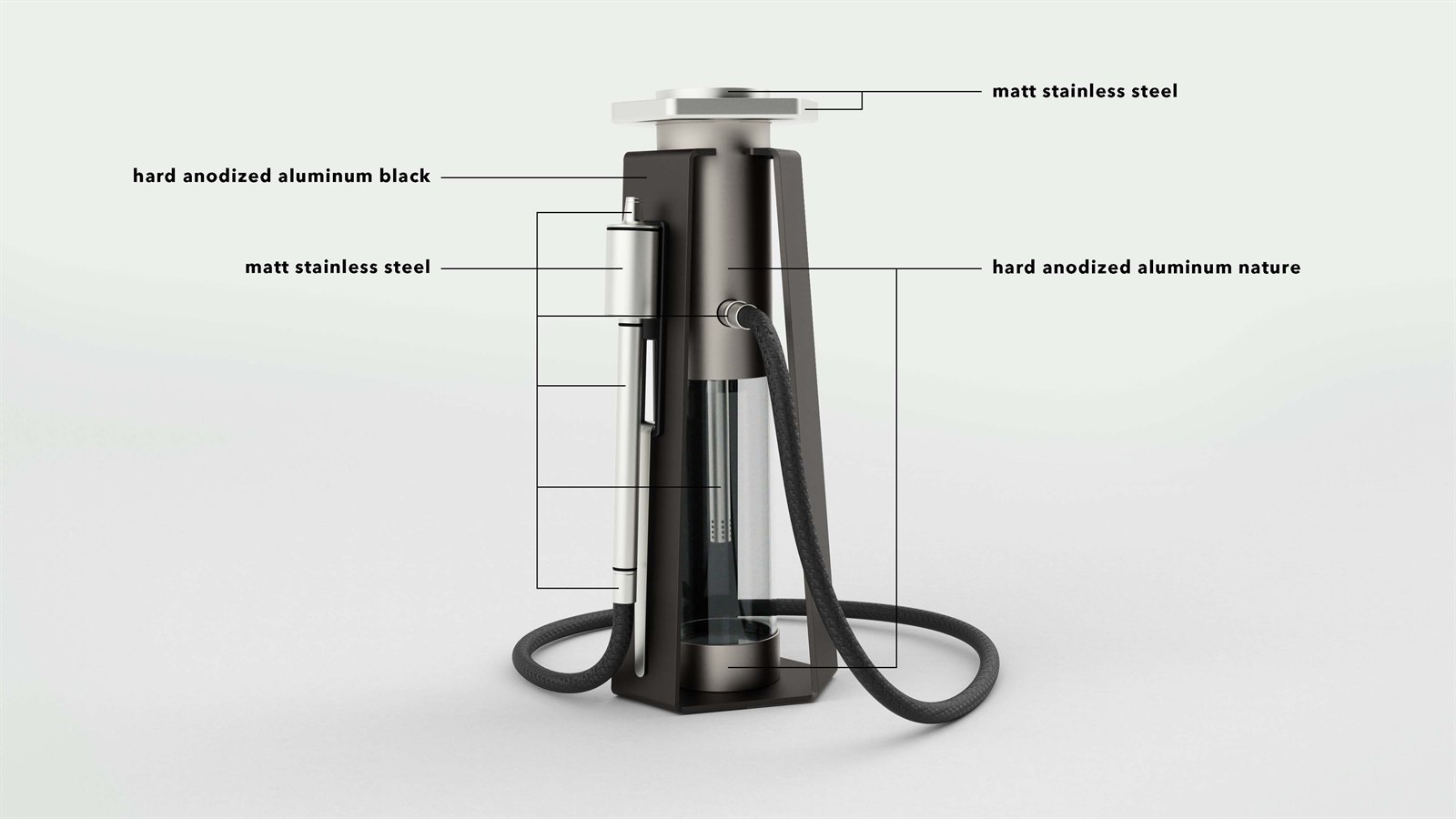
Innovade is built from matt stainless steel, hard anodized aluminium, and borosilicate glass. The choice matters more on a yacht than anywhere else. Hard anodizing grows a dense oxide layer into the surface of the aluminium, which resists salt corrosion far better than bare metal and stays light, an advantage on a boat where weight is always counted. The stainless steel is chosen for the same reason it is used for deck fittings, and the borosilicate glass reservoir takes thermal shock and wipes clean. It is the same family of materials a yard would specify for fittings that have to look right after a season at sea.
Care is simple and worth doing. After use near salt water, rinse the metal and glass with fresh water, dry everything, and store the piece somewhere dry. Salt left to sit is what causes spotting over time, even on marine-grade metal, so the habit of a quick rinse and dry is the whole of the maintenance.
On board: discretion and service
On a crewed yacht the shisha is part of the service, not a chore for the guest. A good steward prepares the head, lights and manages the charcoal, brings the piece out already drawing well, and clears it discreetly afterwards, the same standard of unobtrusive service that makes the rest of the trip work. The owner's experience is simply that the object appears, performs, and disappears.
One point is worth stating plainly. On a charter, what is allowed on board is set by the captain and the charter terms, and many charters restrict or refuse personal charcoal shisha for the fire and insurance reasons above. It is a question to raise with the broker before the trip, and the etiquette of asking the right questions early applies here as much as to anything else. On a privately owned yacht the decision sits with the owner, which is one reason a discreet, well-made personal piece appeals to owners rather than charterers.
In the private residence
The residence is the easier and, for most buyers, the more frequent setting. A terrace, a roof garden, a conservatory with the doors open, or a well-ventilated lounge gives all the freedom that a yacht's fire rules take away. Here the piece is used the way it was designed to be: set on a low table, lit unhurriedly, and left to run through a long evening with good company.
It is also where the object does its quiet work as a piece of design. A considered shisha reads as part of the interior, alongside the glassware and the lighting, rather than as equipment wheeled in for the occasion. The same return to slow, considered hosting that has brought shisha back into private member clubs and members' lounges is what makes it sit naturally in a private home of the same standard.
Where shisha for yachts happens
The geography of shisha for yachts is consistent. The Mediterranean carries the bulk of the world's superyacht season, so the ritual follows the fleet:
- Monaco. Port Hercules and the surrounding berths, the centre of gravity for European yachting and a residence market to match.
- The Cote d'Azur. Saint-Tropez, Antibes, and Cap Ferrat, where deck entertaining is a settled part of the summer.
- The Balearics. Palma de Mallorca and Ibiza, busy with both charter and private cruising.
- The Greek islands. Mykonos and the wider Cyclades, the glamour end of the season.
- Dubai Marina. The strongest real-world link between yachts, residences, and shisha culture, and a major market for high-end private buyers.
In each of these places the after-dinner shisha is already part of how people entertain at the top of the market. The only question is whether the piece on the table is worth the setting.
A considered gift
A well-made shisha for yachts and private residences has quietly become a serious gift, the kind given to the host who has everything and buys little for themselves. It carries the right signals: it is used in company, it is permanent rather than consumable, and it is unusual enough to be remembered. A German-designed piece in steel and glass sits comfortably alongside the watches, the decanters, and the cigar accessories that already fill that gifting bracket, and it pairs naturally with a good cognac or an aged whisky, a pairing covered in notes on serving shisha with spirits.
Available from Innovade
Innovade is designed and built in Germany and shipped to private clients and their representatives across Europe, the United Kingdom, and the Gulf. The current range, finishes, and ordering details are on the Innovade shop, and enquiries for residences, yachts, and gifting are welcome through the same channel.
Frequently asked questions
Can you smoke shisha on a yacht?
Yes, as a managed outdoor ritual. A charcoal shisha belongs on the open deck, downwind of seating and soft furnishings, never in a closed salon. On a charter, check with the captain first, as many charters restrict personal charcoal shisha.
Is shisha a fire risk on a boat, and how is it managed?
Lit charcoal carries two real risks at sea: embers carried on the breeze, and carbon monoxide in enclosed spaces. Both are managed the same way, by keeping the session outdoors and well ventilated, handling the charcoal away from people and furnishings, and being aware of the wind. Treat it with the same care any UK fire-safety guidance applies to open flame on board.
Does the Innovade use charcoal, or can it run charcoal-free?
It uses charcoal. Innovade is not an electronic or smokeless device. What sets it apart is an engineered metal head that manages the heat from the charcoal precisely, holding the flavour at temperature for a longer, steadier session than foil over clay allows.
Should shisha be used on the deck or in the salon?
The deck, or any open, ventilated space. Any heated charcoal session should be outdoors because of ember and carbon monoxide risk. In a residence the equivalent is a terrace, garden room, or a lounge with the doors open.
How does salt air affect a metal shisha pipe?
Salt air accelerates corrosion on any metal left damp. Innovade's hard anodized aluminium and stainless steel are chosen to resist it, but no marine metal is immune to salt left sitting on the surface, which is why a fresh-water rinse after use matters.
How do you maintain a high-end shisha at sea?
Rinse the metal and glass with fresh water after use, dry everything thoroughly, and store the piece somewhere dry. That short routine is the whole of the upkeep and is what keeps the finish looking right through a season.
On a charter, who decides whether shisha is allowed?
The captain and the charter agreement. Charter terms often restrict personal charcoal shisha for fire and insurance reasons, so raise it with the broker before booking. On a privately owned yacht, the decision is the owner's.
Does a luxury shisha make a good gift for a yacht owner or host?
Yes. It is permanent, used in company, and uncommon enough to be memorable, which places it well as a gift for the owner or host who is hard to buy for.
For the wider view of what raises a shisha from equipment to a considered object, start with our design-first look at the luxury shisha pipe.
