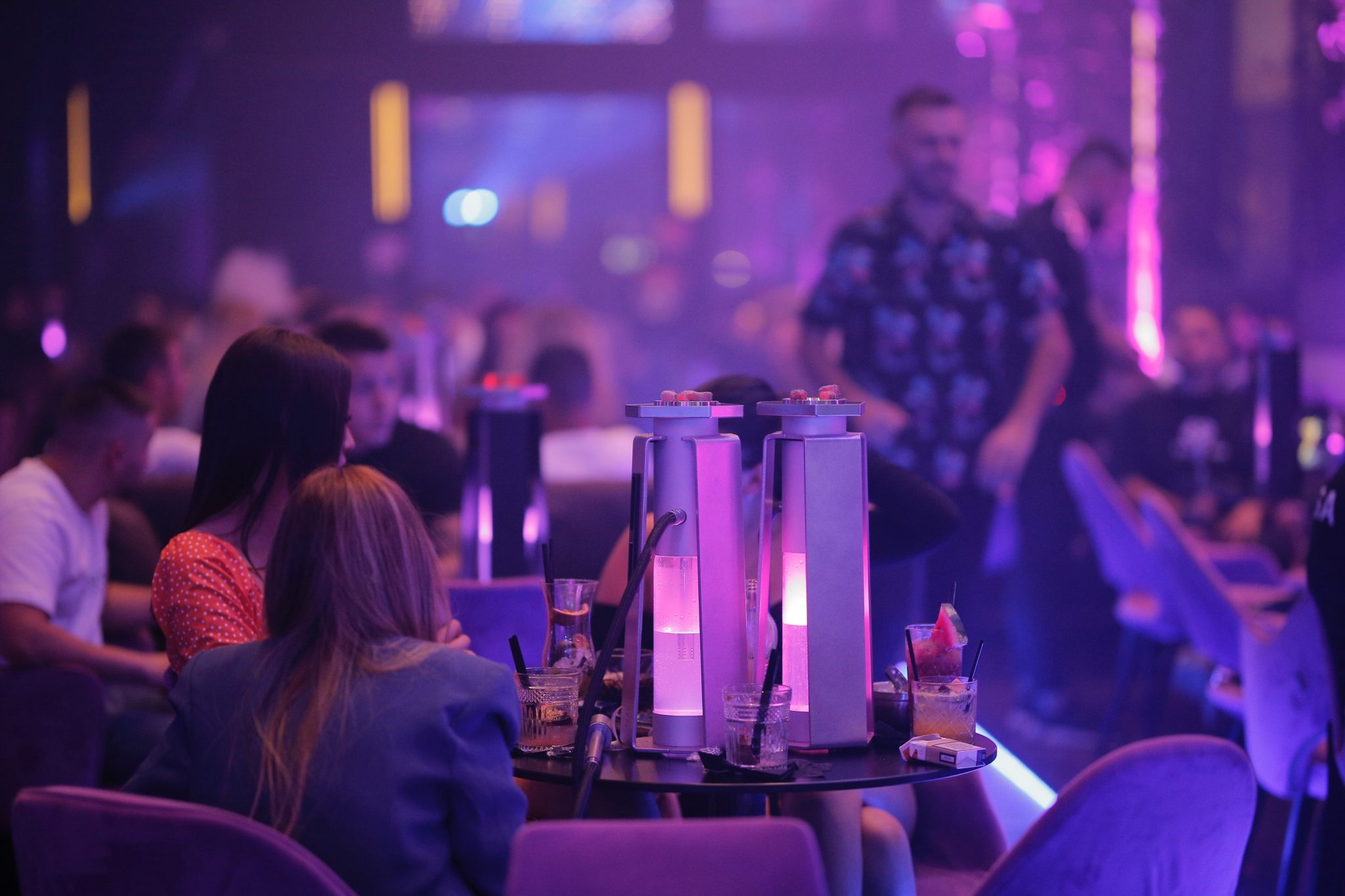
For most of the last decade, the most telling room in a private members' club was the hardest one to name. Not the dining room, not the bar, but the low-lit space between them where members stayed long after the kitchen had closed. That room is being designed again.
In London, Monaco and across the Gulf, club operators are building a deliberate lounge around considered tobacco service. Handled with care, private club shisha is not an amenity bolted onto a drinks list. It is a reason for members to stay, and a quiet test of how well a club understands its own evening.
The members' club rediscovers the lounge
Members' clubs have always kept a room for staying on. The smoking room, the cigar lounge, the snug off the library: each was a place where the evening could slow down without ending. The indoor smoking legislation of the 2000s emptied many of those rooms, and for years clubs filled the gap with little more than another arrangement of armchairs.
What has changed is that members now ask for the room back. They want a third space that carries neither the formality of dinner nor the turnover of the bar. The hospitality industry has noticed the same shift, and the design press has spent the past two years documenting the return of the lounge as a destination rather than a corridor between other rooms. For a club, the lounge is where membership is actually felt. It is unhurried, social, and slightly private, and it rewards a club that treats the late evening as something to design rather than something to tolerate.
Why private club shisha suits the membership model
A members' club earns its keep on dwell time and return visits, not on the speed of a transaction. Shisha service rewards exactly those things. A session runs for the better part of an hour. It draws a table together rather than scattering it. It gives a group a reason to order another round, stay for one more conversation, and come back the following week.
Where a bar is built to turn covers, a club lounge is built to hold them, and private club shisha fits that economy cleanly. It extends the evening without forcing it, and it gives the food and beverage team a considered, high-margin ritual that complements the cellar rather than competing with it. Many clubs find that a shisha lounge pairs naturally with their existing service, in the same way that a thoughtful drinks match does. The notes on pairing shisha with whisky, cognac and cocktails are a useful starting point for a beverage director building that side of the offer, and the broader case for curated shisha service in luxury F&B applies as directly to a club as it does to a hotel.
Designing a shisha lounge members return to
The room has to be designed, not improvised. Three things decide whether a shisha lounge works: air, arrangement, and the object on the table.
Ventilation should be planned with the building services team from the outset, so the room never carries the smell of the last session into the next. Seating wants to sit in conversational clusters of four to six, low enough and soft enough to encourage staying rather than passing through. And the pipe itself has to belong to the room. A traditional hookah, with its exposed coal and tall silhouette, reads as equipment, and equipment is the one thing a designed lounge cannot absorb. A contemporary piece reads instead as part of the interior, closer to a table lamp than to a tool. This is where specification matters, and where a club's interior designer should be involved as early as the lighting plan, not consulted once the furniture has arrived.
Lighting and acoustics carry the same weight. A shisha lounge works best in warm, low light that flatters both the room and the object, with no single hard source drawing the eye to a service station. Sound should be controlled so that four separate tables can each hold a conversation without raising their voices. These are ordinary tools of interior design, but they decide whether a member experiences the lounge as a considered destination or as an overflow room. The pipe is the centrepiece, and the room has to be built to let it read that way.
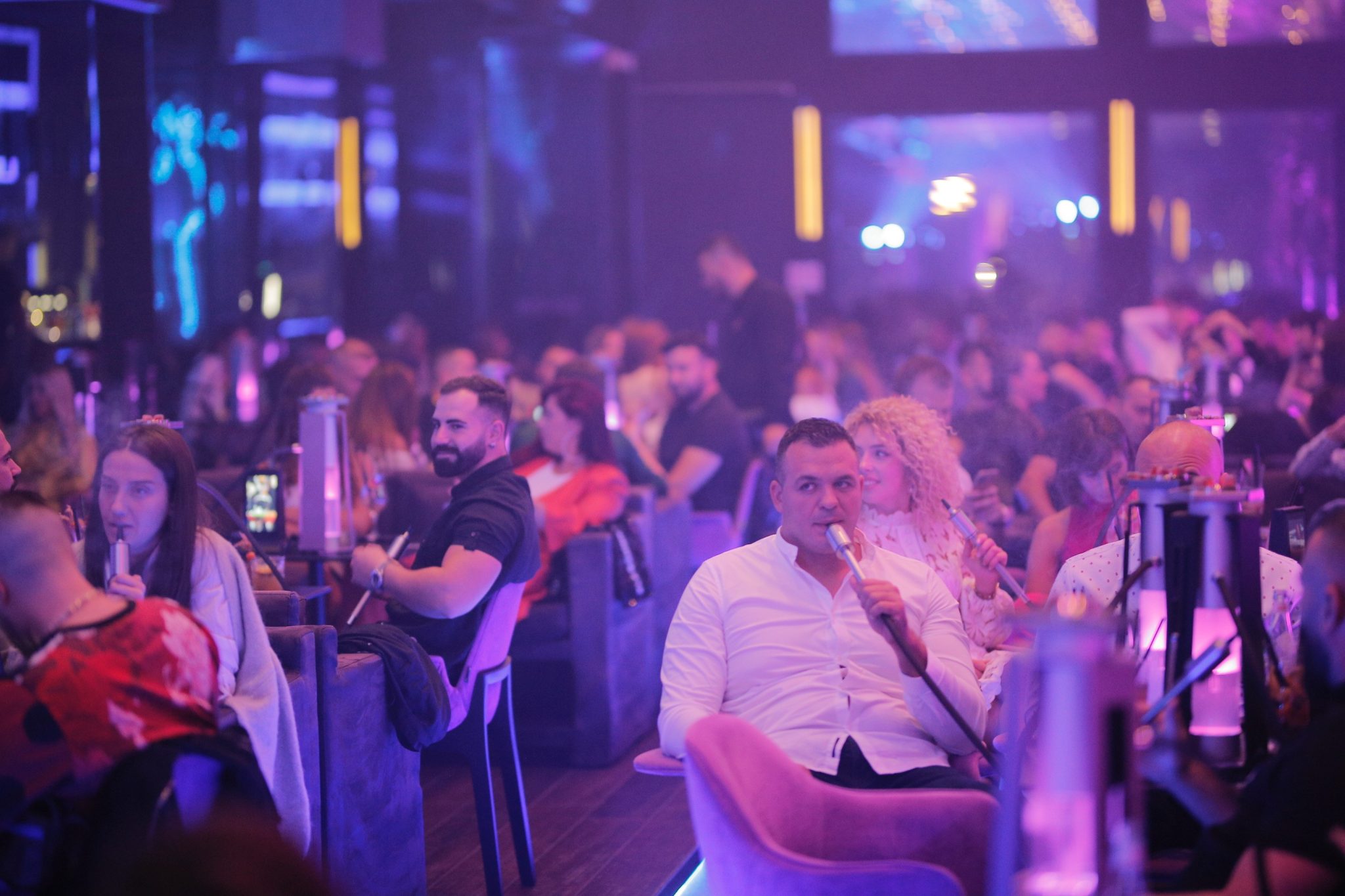
Service, discretion and the member experience
In a members' club, service is the product. Shisha should arrive at the table the way a good bottle does: presented, prepared with care, and then left alone. Staff need a short, confident routine, covering how to set a bowl, how to manage heat, and how to change a session without interrupting a conversation. None of that should be visible as effort.
Discretion is the whole point. There should be no haze drifting across the room, no clatter of coal, no member left quietly adjusting anything themselves. A pipe that manages its own heat lets the team set a session and step back, which is the difference between a lounge that feels staffed and one that feels fussed over. The same principle runs through every well-judged amenity, and the wider question of which hotel and club amenities justify a premium comes down to this kind of restraint far more often than it comes down to expense.
The object on the table: craftsmanship in a members' setting
Whatever sits on a club table is read closely, because members read everything closely. The finish on the cutlery, the weight of a glass, the condition of the hardware after a year of service: these are the details that tell a member whether a club is maintained or merely opened.
An Innovade pipe is designed in a Munich studio and built from heat-resistant alloys and borosilicate glass, with the head unit engineered to hold a steady temperature through a full session. For a club, the relevant quality is not novelty. It is that the piece survives nightly service and still looks right in a designed room a year later. Contract-grade hardware that photographs well on the opening night and ages well through the season is rarer than it should be. The luxury here is restraint: a single considered object on the table instead of a cluttered tray of parts. For the longer argument on what separates a designed pipe from a decorated one, the pillar guide on what makes a luxury shisha pipe sets out the full case.
Club culture from Mayfair to Dubai
The format travels, but it is not identical everywhere, and a club refreshing its lounge should specify for its own city rather than for a generic idea of luxury.
In Mayfair and the surrounding London clubs, shisha service sits inside a culture of discretion: a private room, a small group, nothing announced. In Monaco it leans toward the terrace and the season, an outdoor ritual tied to the calendar. In the Gulf the picture is different again. In Dubai, Riyadh and Doha, shisha is native to club, lounge and majlis culture, and members expect it as a matter of course rather than as a novelty introduced from elsewhere. The through-line across all of them is consistency: the object and the service should match the room, whether that room is a Georgian townhouse off Berkeley Square or a new club floor on the Gulf coast. Private club shisha works when it reads as native to the building, and feels imported the moment it does not.
Procurement notes for club operators
For an operator, the practical questions come down to a short list. Order quantities for a single lounge usually fall between five and thirty pieces, depending on table count and how hard the room is used. Lead times should be confirmed before a launch date is fixed, particularly for shipments into the EU or the GCC, where customs handling can add time that a fixed opening cannot absorb.
Customisation is worth raising early. A club livery, a discreet member-facing finish, or a small edition for a flagship room can be specified at the order stage rather than retrofitted later, and a number of clubs treat that edition as part of the membership offer in its own right. Warranty and replacement-part terms matter more in a club than almost anywhere else, because the hardware is in service every night of the week. A supplier who can talk clearly about contract-grade durability, spares and lead times is the one to shortlist for private club shisha, and the conversation is worth having before the lounge design is signed off rather than after.
Innovade supplies members' clubs and hospitality groups across the UK, Europe and the Gulf, and can advise on lounge specification, club editions and trade order quantities. Enquiries are welcome through innovade.uk.
Frequently Asked Questions
What is private club shisha service?
It is a curated, staff-led shisha offer run inside a private members' club, usually in a dedicated lounge. The pipe is presented, prepared and maintained by trained staff rather than handled by members, and the format is built around dwell time and conversation rather than quick turnover.
Is shisha allowed in private members' clubs in the UK?
Indoor smoking law applies to shisha tobacco in the same way it applies to cigarettes, so most UK clubs run shisha service in a ventilated terrace, courtyard or an appropriately designated outdoor space. A club should confirm the exact position with its licensing advisor before fitting out a lounge.
How many shisha pipes does a club lounge need?
Most single-lounge orders fall between five and thirty pieces. The right number depends on table count, how heavily the room is used, and whether the club wants spares in rotation so hardware can be cleaned and maintained without taking a table out of service.
Does shisha service suit a luxury members' club?
Yes, when it is designed in rather than added on. Shisha service extends the evening, draws a table together, and rewards the dwell time a club depends on. The fit is strongest where the room, the service routine and the pipe itself are all considered to the same standard as the club's dining and bar offer.
Can shisha pipes be branded for a club?
They can. A club livery, a discreet custom finish or a small edition for a flagship room can be specified at the order stage. Some clubs treat a bespoke edition as part of the membership experience, much as they would a house glassware pattern or a commissioned object.
How is a contemporary pipe different from a traditional hookah in a club setting?
A contemporary pipe is designed to sit in an interior rather than to look like equipment. There is no exposed coal, the silhouette is lower and quieter, and the head unit manages its own heat so staff can set a session and step back. In a designed members' lounge, that restraint is what allows the object to belong.
A lounge is only ever as considered as the objects it is built around. For the same question approached from the hospitality side, the related guide on the hotel amenities that justify a premium room rate looks at how this kind of restrained service reads to a paying guest.
