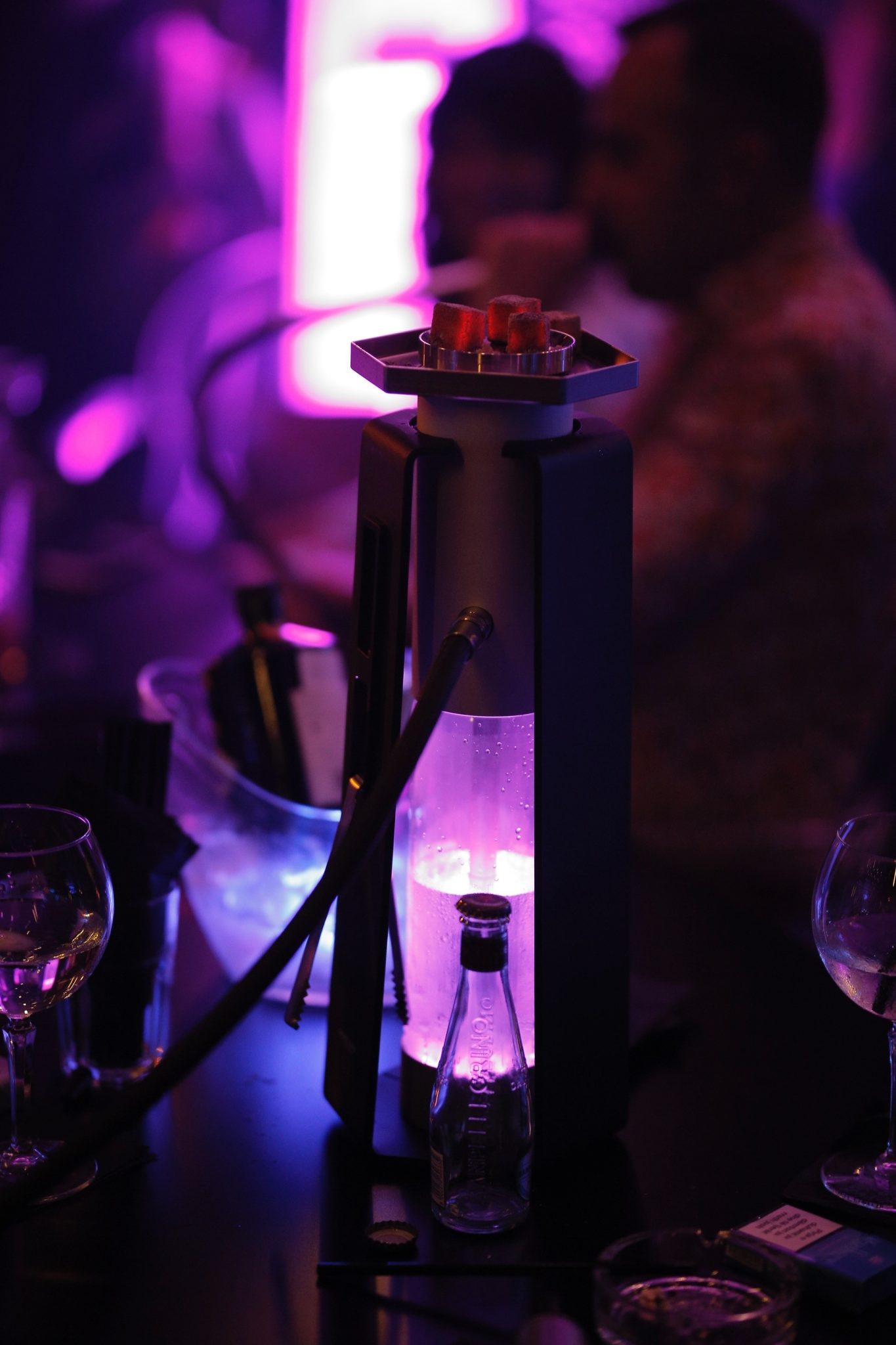
The ritual of shisha has always sat alongside drinking culture. In the great cafes of Istanbul and the private clubs of Beirut, a pipe was ordered alongside coffee, a glass of arak or a quietly poured whisky. Today, as five-star hotels and private member clubs formalise their shisha programmes, the question of what to pair it with has moved from personal preference to F&B strategy.
This is a practical guide to shisha pairing - matching pipe tobacco profiles to spirits and cocktails in a way that reads coherently on a menu and elevates the guest experience. The material here is aimed at F&B directors, head bartenders and sommeliers who are specifying or refining a shisha service and want to bring the same rigour to it that they apply to food and wine pairings.
Why Shisha Pairing Is an F&B Director's Problem
Shisha, properly served, is a two-hour ritual. Guests who take a pipe during an evening session are almost always drinking alongside it. If the bar team has not thought about what sits beside the pipe, the guest will order whatever is in front of them - and the experience is left to chance.
A considered pairing programme changes that. It signals that the venue treats shisha as a curated F&B offer rather than an afterthought. It creates a second occasion for a second round of drinks. And it gives the service team something meaningful to recommend, which lifts confidence and average spend in the same motion.
The mechanics are not complicated. Shisha tobacco - whether natural, herbal or a proprietary house blend - has a flavour profile defined by its base material, its humectant level, and its heat management. Those variables can be mapped to spirits and cocktails in the same way a dish might be mapped to a wine list. The pairing exercise is learnable in an afternoon for any competent sommelier or bar manager.
Reading the Flavour Profile of a Shisha
Before building a pairing matrix, the F&B team needs to understand what their tobacco actually tastes like. This step is often skipped. Shisha is frequently bought on category - mint, apple, grape, mixed fruit - without anyone on the beverage team having mapped its actual tasting notes.
A useful starting framework breaks shisha profiles into four broad registers:
- Floral-citrus: bergamot, elderflower, yuzu, white peach. Light and aromatic. These profiles sit high on the palate and fade quickly.
- Stone fruit: apricot, plum, quince, fig. Richer, sweeter, with a mid-palate weight that lingers into the draw.
- Herbal-green: fresh mint, spearmint, anise, basil. Cooling, sometimes sharp. These reset the palate rather than extend it.
- Wood-spice: cinnamon, cardamom, clove, dried tobacco. Warm and drying, with a tannin-adjacent effect on the palate that holds up against heavier spirits.
Most proprietary blends combine two or three of these registers. A good mint-apple blend, for example, has the cooling reset of herbal notes alongside the sweetness of stone fruit. Mapping where a blend sits in this framework is the first step to intelligent shisha pairing.
Pairing Shisha with Single Malt Scotch
Scotch whisky is the natural companion to shisha in British luxury venues. The pairing is already intuitive for many guests - both carry smoke, both reward slow attention. The art is in specificity rather than category.
The broad principle is contrast for lighter profiles and complement for heavier ones. A floral-citrus tobacco - something built around bergamot or elderflower - pairs well beside a Speyside or Lowland malt, where the fruitiness of the spirit extends the pipe's brightness without competing. Expressions in the house range at Glenmorangie, GlenDronach and Highland Park are reliable anchors for this bracket.
Wood-spice blends pair differently. Cinnamon and cardamom profiles can overwhelm a delicate Speyside, but they work well against the dry peat of an Islay expression. The smoke in the spirit becomes a bridge to the warmer spice registers in the tobacco. Laphroaig 10 and Ardbeg Uigeadail appear regularly as recommendations in this bracket across UK club programmes.
Herbal profiles - particularly sharp mint - are generally best avoided alongside Scotch. The combination tends toward the medicinal. If the menu has a strong menthol option, route it toward vodka-based cocktails or a fino sherry instead.
Cognac and Armagnac - A Closer Partnership
In terms of flavour logic, cognac is the closest spirit to shisha. Both are built around grape-derived sweetness, both carry stone fruit as a baseline, and both reward a slow pace. The pairing is not a discovery - it is a restoration. Cognac and shisha were companions in the salons of Paris and the Levant long before the contemporary hotel bar formalised either into a programme category.
For an F&B director specifying a shisha pairing programme, cognac opens up the most coherent design space. A VSOP-grade expression provides the structural sweetness and rounded finish that works against almost any profile built around stone fruit or wood-spice at its core.
Armagnac, which tends toward richer, more oxidative notes, pairs especially well with tobacco blends that have a dried-fruit or fig quality. Its rougher edges and drier finish create genuine contrast against heavily glycerined blends that might otherwise read as cloying alongside a sweeter cognac.
For XO expressions in a high-spend context - the kind of service offered in a Mayfair private dining room or a five-star Dubai hotel suite - the pairing of an aged single-vintage Armagnac against a house-blend tobacco becomes the basis for a structured tasting flight. Several properties in London and Monaco have built menu items around exactly this. The trade press has noted the growing interest in structured shisha and spirits occasions as a distinct hospitality revenue category.
Cocktail Pairings for the Contemporary Bar Programme
Spirits on their own are the traditional pairing, but contemporary bar programmes serve a broader guest mix, and cocktails give the service team more tools. A guest who does not drink Scotch still deserves a coherent recommendation alongside their pipe.
The most transferable cocktail pairings follow the same contrast-or-complement logic as spirit pairings:
- Floral-citrus tobaccos: Aperol Spritz, elderflower Collins, Yuzu Gimlet. The aperitif register extends the pipe's brightness. Avoid sweeter long drinks - they flatten the profile.
- Stone fruit tobaccos: Sour formats work well here - Amaretto Sour, Pisco Sour, Peach Bellini. The acid cuts the sweetness and creates structure on the palate.
- Herbal-green tobaccos: Mojito (obvious, but accurate), Southside, Martini variations with a Pernod rinse. The herbal note in the cocktail mirrors and amplifies the pipe.
- Wood-spice tobaccos: Negroni, Old Fashioned, Mezcal Sour. The drying bitterness of a Negroni is particularly well-matched against a cinnamon-cardamom blend.
Non-alcoholic options matter in GCC hospitality contexts and for the broader guest mix at a five-star property. Sparkling water with a compressed cucumber slice is a classic reset. Shrub-based sodas and drinking vinegars are a more contemporary option that plays well alongside herbal blends - the acidity works similarly to the way a lemon wedge works in tea service. Presenting non-alcoholic pairings with the same level of care as the spirit options signals that the venue has thought about every guest in the room.
Building the Menu for a Luxury Bar or Hotel Programme
A pairing menu does not need to be complicated. Three to five pairings, clearly described, is more actionable than an exhaustive matrix. The goal is to give the service team a confident recommendation for every tobacco on the list - not to document every possible combination for the guest to study.
A format that works in practice:
- Each shisha option carries one primary spirits recommendation and one cocktail recommendation, printed beside it on the menu or brief card.
- The service team is briefed on the rationale during induction - not just "this one pairs with cognac" but why, in one sentence the team member can repeat naturally in conversation.
- The pairings are reviewed seasonally, which gives the bar manager a reason to revisit the tobacco selection and the spirits programme together.
Venues that run shisha as part of a serious F&B offer should also review the equipment they are using. The quality of the pipe affects the flavour directly - heat management, bowl design, and the composition of the stem material all influence what the guest tastes. A well-specified luxury shisha pipe produces a consistently cleaner draw and a more predictable flavour profile, which makes the pairing exercise meaningful rather than approximate.
For hotels adding shisha to their F&B programming for the first time, the guide to curated shisha service in luxury hotels covers the broader programme design, staffing, and service ritual considerations alongside the equipment specification.
Shisha Pairing at Events and Private Functions
The logic of shisha pairing scales well into event contexts - private dining, corporate hospitality, residential entertaining, yacht charters. The format adapts: instead of a menu beside the pipe, the host or event manager pre-selects two or three spirit pairings and the service team presents them at the right moment in the evening.
In a yacht or private residence context, the pipe typically arrives as the final act of a long dinner - after the digestif round, not alongside it. In this case, the pairing consideration shifts to what is already in the glass. An aged rum or tawny port will read very differently from a fresh grappa or a glass of late-harvest Riesling. The tobacco selection should be made with that context in mind, not as a standalone decision.
For events that serve a culturally mixed guest list - common in Gulf-based properties and London venues that attract a significant GCC clientele - a dual track of spirit and non-alcoholic pairings, presented simultaneously without distinction, handles the room cleanly and avoids requiring staff to make assumptions about individual guests.
Innovade pipes are particularly well-suited to event contexts. The procurement brief for bar specification applies equally here: durability of finish under repeated service, ease of breakdown and cleaning between bowls, and a design object that reads as intentional in a formally set space. The stem composition and borosilicate glass base hold up through a full service without showing wear - which matters when the pipe is on a table in front of a paying guest for two hours at a time.
To discuss Innovade shisha pipes for a hotel, bar or event programme, contact the trade team via the enquiry page.
Frequently Asked Questions
What spirits pair best with shisha?
Cognac, single malt Scotch and aged rum are the most reliable spirit pairings. Cognac works with almost any tobacco profile. Peated Scotch pairs well against wood-spice blends. The underlying principle is complement (matching flavour registers) or contrast (bright tobacco, dry spirit), applied according to the specific blend on the menu.
Can cocktails be paired with shisha on a bar menu?
Yes. Cocktails provide more flexibility for mixed-guest environments. Sour formats - Amaretto Sour, Pisco Sour - work alongside stone fruit blends. Negroni and Old Fashioned pair well with spiced tobaccos. Floral cocktails extend the brightness of citrus-forward blends. The same contrast-or-complement logic that governs spirit pairings applies here.
Does wine work as a shisha pairing?
Wine is less commonly paired with shisha in a formal programme context. Off-dry whites - Riesling, Gewurztraminer - can work alongside floral-citrus tobacco. Full-bodied reds tend to compete with most pipe profiles rather than complement them. Sparkling wines and Champagne function better as a palate reset between bowls than as a sustained pairing.
How do non-alcoholic shisha pairings work in GCC hospitality settings?
The same flavour logic applies: sparkling water with citrus for floral blends, shrub-based sodas for stone fruit tobaccos, still water with fresh mint for herbal profiles. Presenting non-alcoholic pairings with the same care as spirit options allows the service team to handle a culturally mixed room without distinguishing between individual guests - which is both more gracious and more professionally consistent.
Should a luxury hotel have a written shisha pairing menu?
Not necessarily a full printed menu, but every tobacco on the list should have a documented pairing recommendation that the service team is briefed on. Three to five pairings, clearly described, is more actionable than an exhaustive matrix. The goal is a confident recommendation from the team, not a document for the guest to analyse.
Does the quality of the pipe affect the flavour pairing experience?
Yes, directly. Heat management, bowl design and stem composition affect what the guest tastes. A properly maintained, well-specified pipe made from heat-managing alloys and borosilicate glass produces a cleaner, more consistent draw - which makes the pairing exercise meaningful rather than approximate. Poor equipment introduces inconsistency that no pairing programme can resolve.
Where do London and Dubai luxury venues source shisha pairing expertise?
Most develop their pairings in-house, through the sommelier or bar manager team. Trade consultancy from a shisha brand's hospitality team is increasingly common for hotels building a shisha programme from scratch. The Middle East hospitality market has the most developed pairing culture and is regularly referenced as a model by London, Monaco and Marbella venues building comparable programmes.
For a full specification of what distinguishes a contract-grade shisha pipe from a retail model - which directly affects the quality of a pairing programme - see the guide to what makes a luxury shisha pipe.
